

A Middle School Athlete’s Guide to Understanding the High School Weight Room
Understanding the High School Weight Room
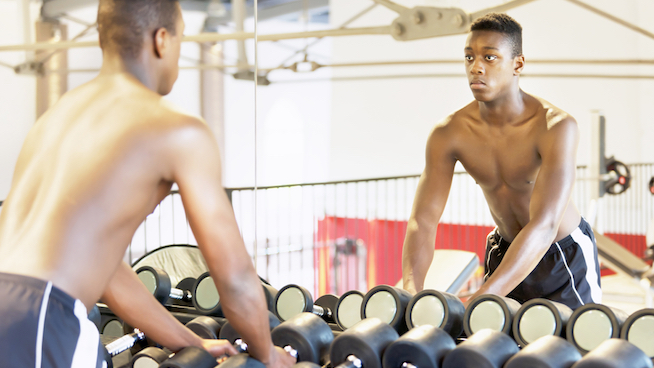
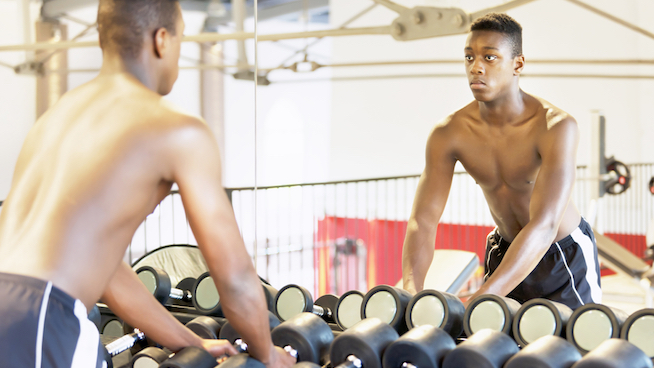
A young colored athlete checking his body in a mirror while he is choosing the dumbbells.
There are racks of barbells, dumbbells, machines, medicine balls, and athletes who might already look bigger and stronger than you. The atmosphere feels serious. Coaches are running drills, music is blasting, and athletes are focused on pushing themselves.
Unlike middle school gym, where activities are usually basic and designed for fun, high school training has structure and purpose. Every exercise has a goal—whether it’s building strength, improving speed, or reducing the risk of injury. You’ll likely follow a program designed by your coaches, and consistency becomes just as important as effort.
One thing many middle school athletes don’t expect is the level of discipline required. In PE, you might get away with goofing off. In the weight room, focus matters. High school athletes are expected to respect the equipment, listen to instructions, and train with intensity. That doesn’t mean it’s all pressure and no fun. In fact, the weight room can be one of the most rewarding places in your athletic journey. But the difference is clear: it’s a training ground, not just playtime.
Knowing this ahead of time helps you avoid being caught off guard. When you understand that the weight room is a serious part of athletic development, you can step in prepared to contribute rather than just watch from the sidelines.
Building a Solid Foundation Before Lifting Heavy
Here’s a secret that many middle school athletes overlook: you don’t need heavy weights to start getting stronger. In fact, the smartest thing you can do right now is focus on building a foundation through bodyweight training and mobility work.
Think about it like building a house. You wouldn’t start by putting up walls without a strong foundation. In sports, your foundation is made of core strength, balance, flexibility, and control of your own body. Push-ups, pull-ups, squats, lunges, and planks may seem simple, but mastering these movements prepares your muscles, joints, and tendons for the heavier loads you’ll face later.
Mobility is just as important. If your hips, shoulders, and ankles move properly, your lifts will be stronger and safer. Stretching, dynamic warm-ups, and even activities like yoga can improve the way your body performs under stress. Skipping this step often leads to poor form or injuries once the weights increase.
Another piece of the foundation is endurance. High school training can be intense, and if you tire quickly, your form breaks down. Doing bodyweight circuits, sprints, or even jump rope can build stamina. The goal isn’t to look impressive right now—it’s to create a body that’s ready to handle years of growth and training ahead.
If you spend your middle school years perfecting these basics, the transition to heavy lifting will feel natural. While others struggle with form or get sidelined with injuries, you’ll already have the base that sets you apart.
The Importance of Proper Form and Technique
If you only take one lesson from this guide, let it be this: form comes before weight. Too many athletes think success is about lifting the heaviest barbell in the room. But strength built on bad technique is like stacking bricks on a shaky table—it won’t last long before it collapses.
Proper form does two things. First, it keeps you safe. When you squat with your knees in the wrong position or arch your back during a deadlift, the risk of injury skyrockets. Injuries don’t just hurt in the moment—they can sideline you for weeks or even months, putting your sports season at risk. Second, good form makes you stronger in the long run. When your body moves correctly, you activate the right muscles, which means every rep actually builds power where you need it.
Technique also builds confidence. Imagine walking into the weight room and knowing you can squat, bench, or deadlift with clean, controlled movement. Not only will coaches notice, but you’ll also earn the respect of teammates who see you taking training seriously.
Learning form takes patience. Start light, sometimes with just a broomstick or PVC pipe instead of a barbell. Focus on small details like foot placement, breathing, and posture. Over time, these habits become automatic, and when you finally add weight, you’ll be prepared to lift safely and effectively.
The athletes who last the longest aren’t always the ones who start the strongest—they’re the ones who move the best.
Developing a Growth Mindset Toward Training
Here’s something important: weight training is not about instant results. You won’t become a varsity starter overnight, and you won’t double your strength in a week. Progress is steady, and that’s where mindset makes all the difference.
A growth mindset means believing that your abilities can improve with effort and practice. Instead of saying, “I’m just not strong enough,” you learn to say, “I’m not strong enough yet.” That little word—yet—changes everything. It shifts your focus from where you are today to where you’re going tomorrow.
In the weight room, setbacks will happen. Some days, the weights will feel heavy. Other days, you might struggle to hit the same numbers you did last week. A fixed mindset sees that as failure. A growth mindset sees it as part of the process. Every rep, whether easy or hard, moves you closer to improvement.
Think about training like climbing a mountain. You don’t reach the top in one giant leap. You climb step by step, learning from the path and building endurance along the way. Athletes with a growth mindset celebrate small wins—like holding a plank longer, adding one more push-up, or learning perfect squat form—because they know those wins add up over time.
If you can carry this mindset into the high school weight room, you’ll stand out. Coaches love athletes who stay positive, work hard, and keep pushing forward no matter what. That’s the kind of attitude that not only makes you stronger but also makes you a leader.